

Most Popular Products
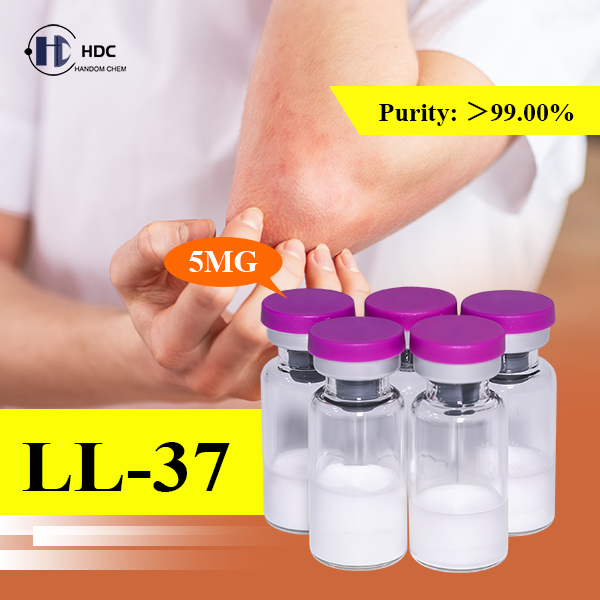
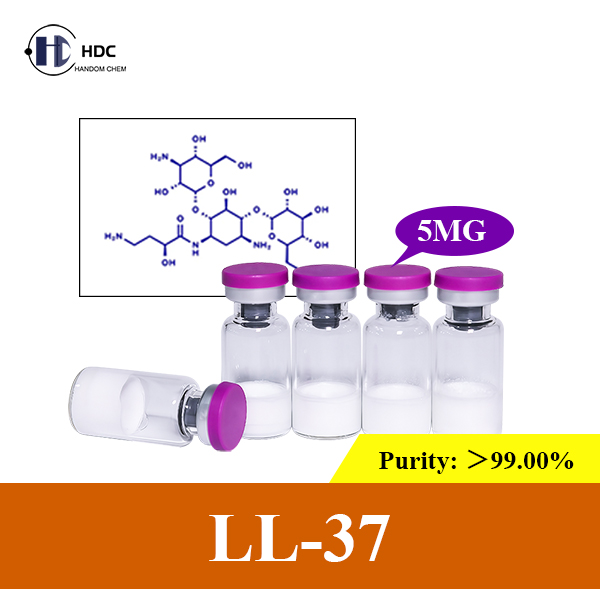
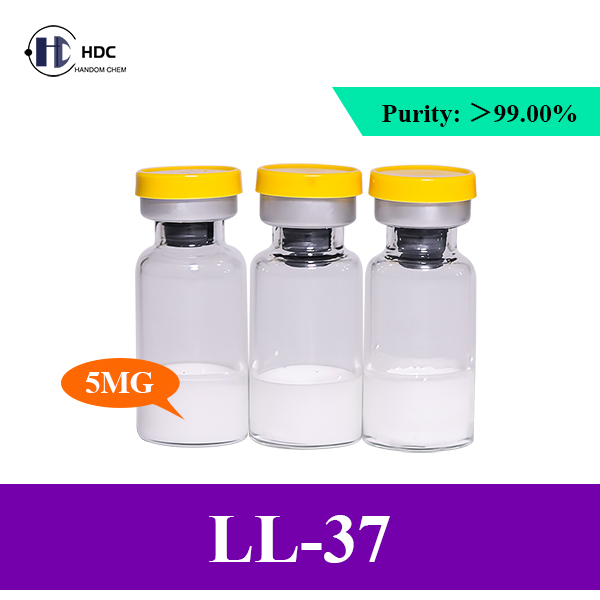
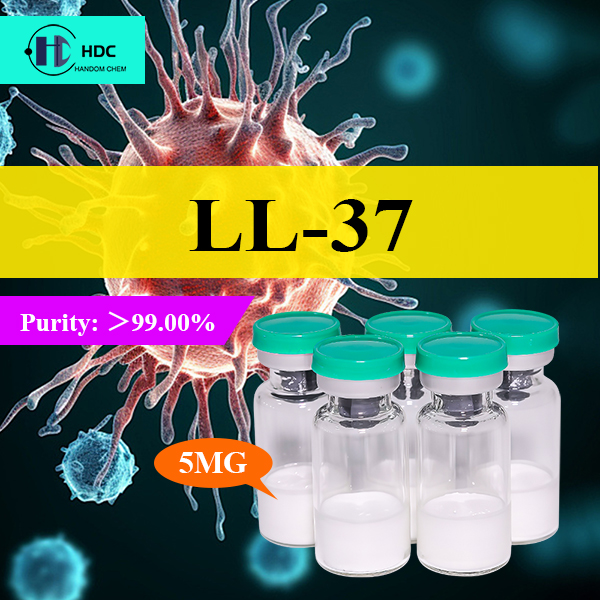
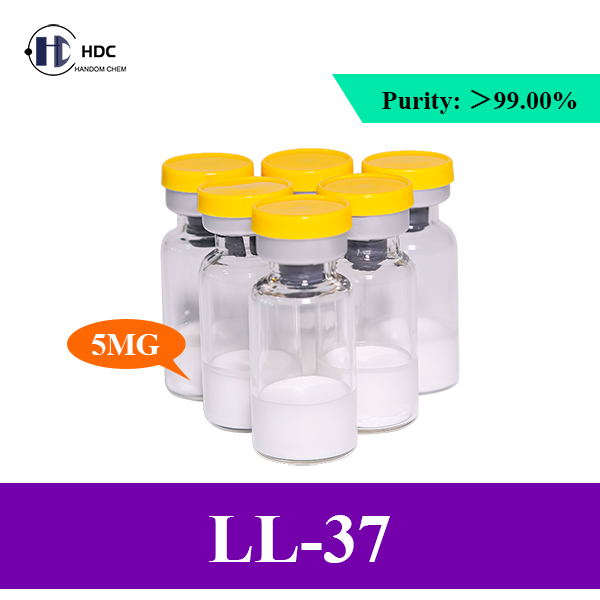
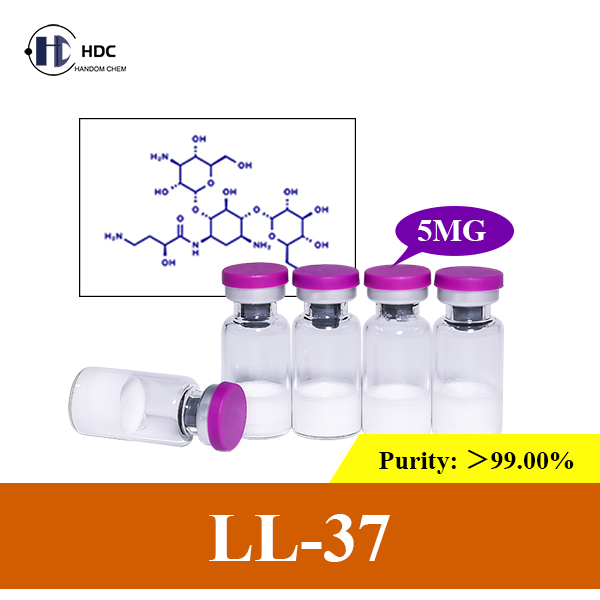
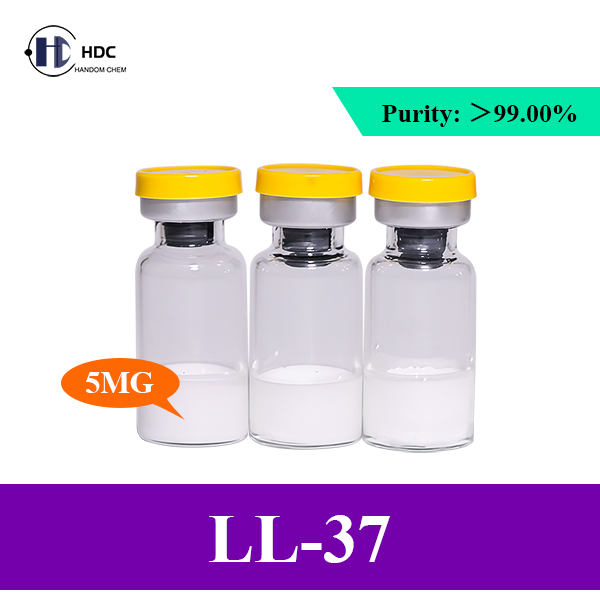
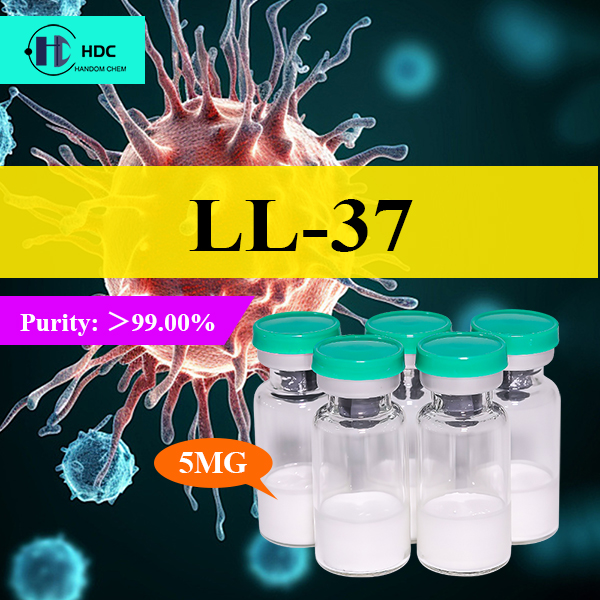
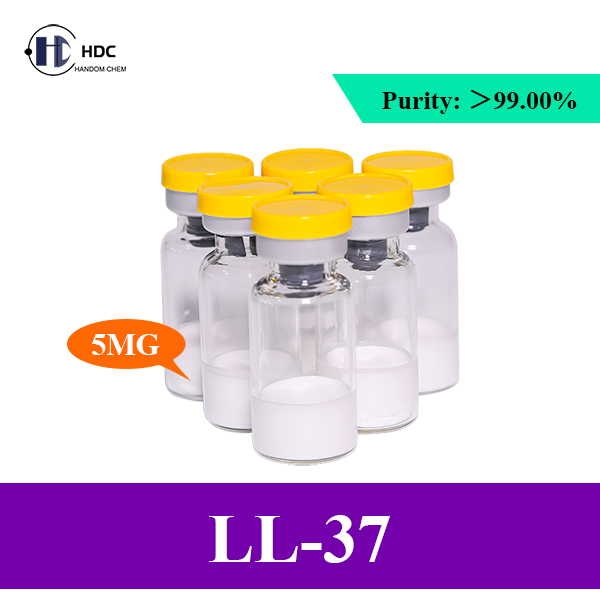
LL-37 China
12.0 USD ($)/Piece
Product Details:
- Shelf Life 24 Months
- Molecular Formula C205H340N60O53
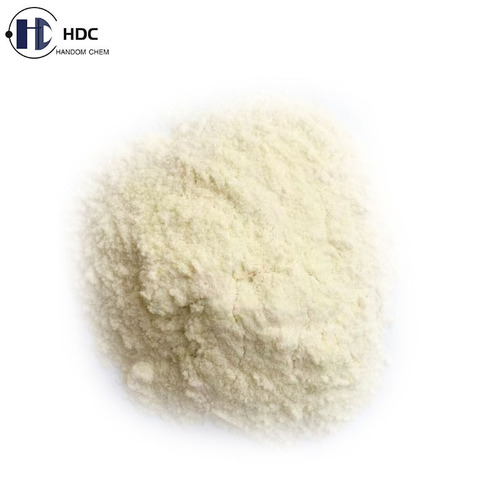
- Appearance White powder
- Application Pharmaceutical
- Properties 1. Physical Properties Appearance: The pure product is usually a white or off-white lyophilized solid powder. Net Charge: Under normal bodily conditions (pH 7.4), it carries a strong positive charge of +6. This makes it highly attractive to negatively charged bacterial surfaces. Isoelectric Point (pI): Approximately 10.61. It is a strongly basic polypeptide. 2. Spatial Structure Characteristics Chameleon-like Structure (Structural Plasticity): In pure water: It has no fixed shape and a loose structure, mainly in a random coil state. In the presence of salt or in contact with cell membranes: It rapidly twists into a very stable -helix structure. Perfect "Dual Nature" (Amphiphilicity): When it becomes an -helix, it exhibits dual affinity: The hydrophilic side: One side is lined with positively charged amino acids (lysine, arginine), which readily bind to water and bacterial surfaces. Hydrophobic surface: The other side is lined with water-averse amino acids (leucine, phenylalanine), which prefer to penetrate the lipid layer of bacterial cell membranes. 3. Environmental and Chemical Behavior Characteristics Concentration-dependent "aggregation" (oligomerization): At low concentrations (below 10 M), it prefers to work alone in solution (monomer form). At high concentrations or in saline environments, it aggregates in groups (forming dimers or tetramers). This aggregation behavior protects it from easy degradation by enzymes in the body. Salt sensitivity: The salt ion composition in solution alters its spatial shape. High concentrations of salt act as a shield, blocking its positive charge, thus slightly reducing its direct bactericidal rate, but not affecting its ability to call on immune cells. Protein resistance: Compared to other common peptides, LL-37 exhibits strong resistance to degradation by human proteases when bound to cell membranes, allowing it to survive longer in inflamed wounds.
- Storage Freezer
- Product Type Peptides
- Click to View more
X
LL-37 China Price And Quantity
- 10 Piece
- 12.0 USD ($)/Piece
LL-37 China Product Specifications
- Powder
- 99%
- other
- Research Grade
- 1. Physical Properties Appearance: The pure product is usually a white or off-white lyophilized solid powder. Net Charge: Under normal bodily conditions (pH 7.4), it carries a strong positive charge of +6. This makes it highly attractive to negatively charged bacterial surfaces. Isoelectric Point (pI): Approximately 10.61. It is a strongly basic polypeptide. 2. Spatial Structure Characteristics Chameleon-like Structure (Structural Plasticity): In pure water: It has no fixed shape and a loose structure, mainly in a random coil state. In the presence of salt or in contact with cell membranes: It rapidly twists into a very stable -helix structure. Perfect "Dual Nature" (Amphiphilicity): When it becomes an -helix, it exhibits dual affinity: The hydrophilic side: One side is lined with positively charged amino acids (lysine, arginine), which readily bind to water and bacterial surfaces. Hydrophobic surface: The other side is lined with water-averse amino acids (leucine, phenylalanine), which prefer to penetrate the lipid layer of bacterial cell membranes. 3. Environmental and Chemical Behavior Characteristics Concentration-dependent "aggregation" (oligomerization): At low concentrations (below 10 M), it prefers to work alone in solution (monomer form). At high concentrations or in saline environments, it aggregates in groups (forming dimers or tetramers). This aggregation behavior protects it from easy degradation by enzymes in the body. Salt sensitivity: The salt ion composition in solution alters its spatial shape. High concentrations of salt act as a shield, blocking its positive charge, thus slightly reducing its direct bactericidal rate, but not affecting its ability to call on immune cells. Protein resistance: Compared to other common peptides, LL-37 exhibits strong resistance to degradation by human proteases when bound to cell membranes, allowing it to survive longer in inflamed wounds.
- Soluble in water
- NO
- LL-37
- Other
- 2937190099
- Freezer
- Peptides
- N/A
- 24 Months
- C205H340N60O53
- 1. Research on Superbugs and Drug-Resistant Bacteria (New Antibiotic Development) With the increasing severity of antibiotic resistance (AMR) problems, LL-37 has become an ideal template for researching new antibacterial drugs. Disrupting Resistant Biofilms: It not only directly kills free bacteria but also disrupts the "bacterial biofilm" formed by Staphylococcus aureus or Pseudomonas aeruginosa. This is an area where many traditional antibiotics are ineffective. Enhancing Drug Efficacy through Combination Therapy: In scientific experiments, researchers often combine low doses of LL-37 with traditional antibiotics, which can significantly improve the antibiotic's effectiveness against superbugs. 2. Chronic Wound Healing and Skin Repair (Clinical Drug Development) LL-37 has shown significant effects in promoting tissue regeneration and has made rapid progress in clinical translation. Treatment of Lower Extremity Venous Ulcers: LL-37-related drugs, supported by institutions such as the Karolinska Institute in Sweden, have entered Phase II clinical trials internationally for the treatment of chronic ulcers caused by varicose veins. Promoting Angiogenesis and Epithelial Growth: It stimulates the growth of vascular endothelial cells, attracts immune cells to wounds, and enables chronic wounds lacking this component (such as diabetic foot) to resume granulation and healing. 3. Gastrointestinal Tract and Mucosal Immune Barrier Research LL-37 is widely present in the human gastrointestinal mucosa. Scientists are using it to study the pathological mechanisms and treatment strategies of inflammatory bowel disease (IBD), gut microbiota dysbiosis, and gastric ulcers. Eye and Respiratory Protection:** Research focuses on how it protects the cornea from infection and its protective role in acute lung injury or respiratory infections. 4. Disease Diagnostic Markers and Targeted Therapy (Psoriasis, etc.) Because the amount of LL-37 is directly related to the level of inflammation in the body, it is also used as a target for medical diagnostics and targeted research. Autoimmune Disease Target: In the skin lesions of patients with psoriasis and rosacea, the expression level of LL-37 is often abnormally elevated and exacerbates inflammation. Therefore, developing drugs that "inhibit or antagonize LL-37" has become a new approach to treating these skin diseases.
- Other
- White powder
- 154947-66-7
- Pharmaceutical
LL-37 China Trade Information
- Shenzhen
- Telegraphic Transfer (T/T), Western Union
- 10000 Piece Per Week
- 3 Days
- Yes
- If order is confirmed we will reimburse the sample cost
- 10 vials/box
- Asia, Australia, North America, Western Europe
- GMP, ISO
Product Description
LL-37 is a very important natural antimicrobial peptide in the human body. It is the only member of the human Cathelicidin antimicrobial peptide family and is composed of 37 amino acids. As a member of the human innate immune system, it acts like a "natural antibiotic" in the body, playing a central role in protecting the body from pathogens.Tell us about your requirement

Price:
Quantity
Select Unit
- 50
- 100
- 200
- 250
- 500
- 1000+
Additional detail
Mobile number
Email

Other Products in 'Peptide Preparations' category

Quick Inquiry

Contact Details
DALIAN HANDOM CHEMICALS CO.,LTD.
RM702, Unit 1, Building 21, Liuhe Road, Ganjingzi Dist,Dalian - 116091, Liaoning, China
Phone :--+8615840669648
 Send Inquiry
E-mail us : export@handom-chem.com

 |
DALIAN HANDOM CHEMICALS CO.,LTD.
All Rights Reserved.(Terms of Use) Developed and Managed by Infocom Network Private Limited. |
