
- Home Page
- Company Profile
-
Our Products
- APIs And Intermediates
- Semaglutide intermediate tBuO-Ste-Glu(AEEA-AEEA-OSu)-OtBu
- Semaglutide side chain TBuO-Ste-Glu(AEEA-AEEA-OH)-OtBu
- Eptifibatide Acetate
- GIPGLP 1 Tirzepatide
- Creatine Pyruvate
- Isopropoxyboronic Acid Pinacol Ester
- Vosoritide Acetate
- (S)-(-)-2-Methyl-2-Propanesulfinamide C4H11NOS
- Tirzepatide side chain Fmoc-Lys(TBuO-Ara-Glu(AEEA-AEEA)-OtBu)-OH
- Ferric Carboxymaltose
- Semaglutide intermediate Fmoc-Lys(tBuO-Ste-Glu(AEEA-AEEA)-OtBu)-OH
- Minocycline Hydrochloride
- Calcium Pyruvate 70%
- Cefazolin Sodium Sterile
- (3S)-3-(aminomethyl)-5-methyl-hexanoic acid Pregabalin
- 5-Aminolevulinic Acid Hydrochloride
- 2-acetamido-5-sulfamoyl-1 3 4-thiadiazole Acetazolamide
- Semaglutide starting material (S)-2-(2-((tert-Butoxycarbonyl)amino)-3-(1-trityl-1H-imidazol-4-yl)propanamido)-2-methylpropanoic acid
- Resmetirom intermediate 3,5-Dichloro-4-((6-Chloro-5-Isopropylpyridazin-3-Yl)Oxy)Aniline
- Tirzepatide intermediate TBuO-Ara-Glu(AEEA-AEEA-OH)-OtBu
- Semaglutide side chain HO-Ste-Glu(AEEA-AEEA-OSu)-OH
- Ivermectin CAS No.: 70288-86-7
- Pharma Intermediate Pregnenolone
- Vildagliptin 274901-16-5
- Phenothiazine C12H9NS
- Dexamethasone CAS No.: 50-02-2
- Lamivudine C8H11N3O3S
- Tranexamic Acid
- Maduramicin Ammonium
- Levamisole Hydrochloride
- Methylliberine C9H12N4O3
- Betamethasone Dipropionate
- 6- Methyluracil
- 2-Methyl-2-Propanesulfinamide C4H11NOS
- 2-Bromopropene C3H5Br
- Bis(Pinacolato)Diboron C12H24B2O4
- O-Phospho-L-Serine H-Ser(PO3H2)-OH
- Tetrahydroxydiboron B2H4O4
- (R)-(+)-2-Methyl-2-Propanesulfinamide C4H11NOS
- Sodium 8-(2-hydroxybenzamido)octanoate
- Molnupiravir C13H19N3O7
- Terbinafine Hydrochloride
- Sermaglutide CAS No.: 910463-68-2
- Dehydroepiandrosterone DHEA
- Semaglutide delivery excipient Salcaprozate Sodium
- Methyl Salicylate
- Betadex Sulfobutyl Ether Sodium
- Polyvinyl Pyrrolidone
- Dimethyl Sulfoxide
- Fursultiamine Fursutiamine
- Pharmaceutical Peptide Semaglutide
- Finerenone BAY 94-8862
- Sodium Salicylate
- Cagrilintide C194H312N54O59S2
- Mazdutide C210H322N46O67
- Body Protection Compound-157 (BPC157)
- Ruxolitinib Phosphate
- Medetomidine C13H16N2
- Tirzepatide China
- Cagrilintide China
- Semax China
- Wolverine Blend
- BPC-157 Medicine
- Vitamins
- Pyridoxal 5-Phosphate Monohydrate
- Folic Acid
- Riboflavin Sodium Phosphate
- Thiamine Hydrochloride
- D-Alpha Tocopherol 1000IU
- D-Alpha Tocopheryl Acetate 1360IU
- D-Alpha Tocopheryl Acid Succinate 1185IU/g
- Vitamin D3 100000 IU
- Palm Tocotrienols 92%
- DL-Alpha Tocopherol
- D-Panthenol Intrapan
- Pyridoxine Hydrochloride
- Rice Tocotrienols 85%
- D A Tocopherol Acid Succinate
- Mixed Tocopherols
- Vitamin B12 Powder
- Vegan Vitamin D3 Oil
- Vitamin K2 Oil
- D Alpha Tocopheryl Acetate
- D Alpha Tocopherol
- Riboflavin Vitamin B2
- Cyanocobalamin VB12
- Mecobalamin (Methylcobalamin)
- D-Biotin Vitamin H
- Vitamin A Acetate Oil
- Vitamin D3 1000000IU/g Oil
- Vitamin A Palmitate Oil
- Food Ingredients
- Menthol Acetate
- L-Lactic Acid
- Cinnamic Aldehyde
- Inulin Powder
- L-Theanine N-ethyl-L-glutamine
- L-Threonine L-THR
- DL-Alpha Tocopheryl Acetate
- L-Menthyl Lactate
- Chitosan Glutamate
- L-Carnitine Vitamin BT
- Beta-Carotene 1%
- Antarctic Krill Oil
- Apple Pectin
- N-Acetyl-L-Tyrosine CAS No.: 537-55-3
- Magnesium L-Threonate
- Menthyl Isovalerate
- N-Ethyl-2-(Isopropyl)-5-Methylcyclohexanecarboxamide WS-3
- Pumpkin Seed Protein Powder
- Sunflower Seed Protein Powder
- Geraniol Linalool
- L-Tyrosine Tyr
- L-Citrulline CAS No.: 372-75-8
- D-Aspartic Acid CAS No.: 1783-96-6
- 3-Methyl-10-Ethyl-Deazaflavin C14H13N3O2
- Cis-3-Hexenol Leaf Alcohol
- Fish Oil 18/12 EE
- Apigenin Versuline
- Dehydrozingerone C11H12O3
- Oyster Peptide
- 2,4-Decadienal C10H16O
- Dihydroactinidiolide C11H16O2
- Megastigmatrienone C13H18O
- Butyl Butyryllactate
- Nicotinamide Mononucleotide NMN
- Cooling agent N-ETHYL-2,2-DIISOPROPYLBUTANAMIDE
- Bovine Collagen Peptide
- Sea Cucumber Gonad Peptide
- Cooling agent N,2,3-Trimethyl-2-Isopropylbutamide WS-23
- Glucosamine Hydrochloride
- Fish Collagen Peptide
- (1R, 2S, 5R)-N-(4-Methoxyphenyl)-5-Methyl-2-(1-Methylethyl)Cyclohexanecarboxamide WS-12
- Mung Bean Protein Powder
- Neohesperidin Dihydrochalcone
- Cooling agent Menthoxypropanediol WS-10
- 5-Methyl-2-Phenyl-2-Hexenal C13H16O
- Non GMO Natural Flavored Pumpkin Seed Protein
- Xanthan Gum
- 5-allylguaiacol (Eugenol)
- Sorbitol Solution
- Food Grade Alginate Oligosaccharide
- Rice Protein Powder
- Pineapple stem Bromelain
- Lysozyme LZM
- Walnut Peptide
- Chickpea Protein Powder
- Fava Bean Protein
- Food Grade Fructooligosaccharide
- Food Grade Chitosan Oligosaccharide
- Galactomannan GM
- Soya Lecithin Liquid
- Chymosin 600 IMCU/ml
- Chymotrypsin powder
- Amino peptidase
- Alkaline Protease
- Refined Fish Oil (EPA)
- Refined Fish Oil (DHA)
- Refined Fish Oil (EPA/DHA)
- Sea Cucumber Oligopeptide
- Creatine Monohydrate
- Food Grade Chitosan Oligosaccharide
- Modified Citrus Pectin
- L- Serine
- Citrus Pectin
- Sunflower Pectin
- Mung Bean Starch
- Soya Lecithin Powder
- Personal Care Chemicals
- 2-(Perfluorohexyl)ethyl methacrylate
- Cosmetic Grade Titanium Dioxide
- Allantoin 5-UREIDOHYDANTOIN
- Piroctone Olamine
- Hydroquinone Quinol
- Cosmetic Peptide Hexapeptide-11
- Ergothioneine 497-30-3
- Whitening agent Glabridin 90%
- Orotic Acid Anhydrous
- Isobornyl Acetate
- Hydrolyzed Keratin
- Kojic Acid
- Lanolin Anhydrous USP23
- Potassium Cetyl Phosphate
- Calcium Thioglycolate
- APG0810 Alkyl Glucoside
- Octocrylene Octocrilene
- Avobenzone UV 1789
- Polihexanide HCl
- Chlorhexidine Gluconate 20% Solution
- Carbomer 940 Chemical
- Transparent Xanthan Gum
- Lanolin Anhydrous USP40
- 3-O-Ethyl-L-Ascorbic Acid
- N-Carboxy Propionyl Chitosan Sodium
- Sodium Hyaluronate
- Climbazole powder
- Disodium Lauryl Sulfosuccinate 95% Powder
- (-) -Alpha-Bisabolol C15H26O
- Propylene Glycol
- Pharmaceutical Excipients
- LNP delivery system excipient mPEG-DSPE-2K
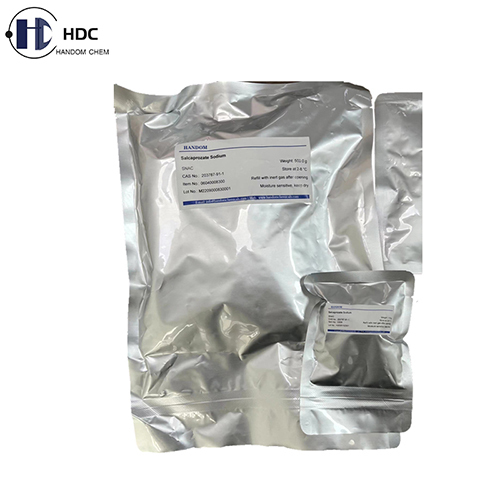
- Salcaprozate Sodium (SNAC)
- Injection Grade Soya Lecithin
- Lactose Anhydrous
- Cholesterol C27H46O
- Benzoic Acid
- Lactose Monohydrate
- L-A-Lecithin Distearoyl
- 1,2-Dipalmitoyl-Sn-Glycero-3-Phospho-(1-Rac-Glycerol) (Sodium Salt)
- Betadex Sulfobutyl Ether Sodium
- Pharmaceutical Grade Sodium Stearate
- Sodium Lactate 60% Solution
- Pharmaceutical Grade Carboxymethyl Chitosan
- Vitamin E Polyethylene Glycol Succinate
- Pharmaceutical Grade Chitosan Hydrochloride
- Pharmaceutical Grade Chitosan
- 1,2-Dierucoyl-Sn-Glycero-3-Phosphocholine DEPC
- Polyvinyl Pyrrolidone (PVP) K90
- Pharmaceutical Grade Fructose
- Methoxypoly (Ethylene Glycol) Dimyristoyl Glycerol-2000
- Pharmaceutical Grade Magnesium Stearate
- Tricaprylin 538-23-8
- POLY(D L-LACTIDE-CO-GLYCOLIDE)
- Sodium 8-(2-hydroxybenzamido) Octanoate SNAC
- Microcrystalline Cellulose 101
- Microcrystalline Cellulose
- 1,2-Distearoyl-Sn-Glycero-3- Phosphocholine
- Dimethyl Sulfoxide
- ((4-Hydroxybutyl)Azanediyl) Bis(Hexane-6,1-Diyl)Bis(2-Hexyldecanoate)
- Cholesterol (Plant)
- Methoxypoly(Ethylene Glycol) Ditetradecylacetamide
- 2,6-Dimethyl Beta Cyclodextrin (DM-Beta-CD)
- UV Absorbers
- Water-soluble UVB absorber Ensulizole
- Benzophenone-8 (UV-24)
- Homosalate HMS
- 2-Ethylhexyl Salicylate(Octyl Salicylate)
- 2-Ethylhexyl Trans-4-Methoxycinnamate(OMC)
- 2-Phenylbenzimidazole-5-Sulfonic Acid (UV-T)
- UVA Absorber Avobenzone
- Benzophenone-3 (UV-9)
- Benzophenone-4 (UV-284)
- Benzophenone- 6
- Benzophenone- 12
- Octocrilene UV3039
- Diethylhexyl Butamido Triazone (HEB)
- Disodium Phenyl Dibenzimidazole Tetrasulfonate
- UVA PLUS Diethylamino Hydroxybenzoyl Hexyl Benzoate
- UV Absorber Bemotrizinol
- Oil-soluble UV-B absorber Iscotrizinol C44H59N7O5
- Uvinul T 150
- UVA Filter Bisdisulizole Disodium
- Diethylaminohydroxybenzoyl Hexyl Benzoate (UVA Plus)
- Ethylhexyl Triazone (Uvinul T 150)
- Bis-Ethylhexyloxyphenol Methoxyphenyl Triazine
- Methylene Bis-Benzotriazolyl Tetramethylbutylphenol
- Butyl Methoxydibenzoylmethane
- Cosmetic Peptides
- L-Carnosine BETA-ALANYL-L-HISTIDINE
- Cosmetic peptide Nonapeptide-1
- Cosmetic Peptide Tetrapeptide-30
- Acetyl Tetrapeptide-15
- Myristoyl Pentapeptide-4
- Acetyl Tetrapeptide-5
- Hexapeptide-9 powder
- Palmitoyl Tetrapeptide-7
- Palmitoyl Tripeptide-8
- Palmitoyl Pentapeptide-4
- Acetyl Octapeptide-3
- Acetyl Hexapeptide-8
- Myristoyl Hexapeptide-23
- Cosmetic Peptide Sh-Oligopeptide-78
- Palmitoyl Tripeptide-5
- Dipeptide Diaminobutyroyl Benzylamide Diacetate
- Biotinoyl Tripeptide-1
- Surfactants
- Specialty Chemicals
- 2 2-Dibromo-3-Nitrilopropionamide (DBNPA)
- Dimethyl Maleate
- 5-AMINOLEVULINIC ACID PHOSPHATE
- Bacillus Thuringiensis
- Hydroxylamine Hydrochloride
- Dibutyl Fumarate
- N-Cyanoacetylurethane C6H8N2O3
- Cyclopropylboronic Acid
- Chitosan Salicylate
- Chitosan Acetylsalicylate
- 2-Amino-1-Cyclopentene-1-Carbonitrile C6H8N2
- Orotic Acid Monohydrate
- Tetrahydrofuran THF
- Sodium Hypophosphite
- Ethylene Glycol Monobutyl Ether
- Chitosan Azelate
- Acetoacetoxyethyl Methacrylate
- Dihydrohonokiol C18H20O2
- Bis(Neopentyl Glycolato)Diboron
- Chitosan Nitrate
- Analogous Hyaluronic Acid Chitosan
- Chitosan Lactate
- Chloramine B
- P-Hydroxyanisole MEHQ
- Sebacic Acid
- Isopropenylboronic Acid Pinacol Ester
- Spermidine Trihydrochloride
- Agricultural Grade Chitosan Oligosaccharide
- Agricultural Grade Alginate Oligosaccharide
- Urolithin A
- Shiitake Mushroom Chitosan
- 5-Deazaflavin deazaflavin
- Peptide Preparations
- Cathelicidin LL-37 (Human)
- Thymosin Alpha 1 (Thymalfasin)
- GHK-Cu China
- MOTS-c (Human)
- Bremelanotide (PT-141)
- TB500 (Thymosin B4 Acetate)
- Tirzepatide 30mg
- China HGH (Human Growth Hormone) 10iu/12iu/15iu/24iu/36iu
- 5-Amino-1MQ 5mg/10mg/50mg
- GLOW 70mg Blend
- Tesamorelin 2mg 5mg 10mg 20mg
- Selank 5mg 10mg 30mg
- Semax 5mg 10mg 30mg
- HGH China
- MOTS-c China
- China MOTS-c 10mg/20mg/40mg
- NAD+ China
- China NAD+ 100mg/500mg/1000mg
- SLU-PP-332 China
- China SLU-PP-332 5mg/10mg
- Melanotan 2 Acetate (MT-2) China
- China Melanotan 2 Acetate (MT-2) 10mg
- China GHK-Cu 50mg/100mg
- TB-500 China
- TB-500 5mg 10mg
- KPV China
- KPV 5mg 10mg
- LL-37 Chemical
- China LL-37 5mg
- Glutathione 400mg, 600mg, 1500mg
- VIP China
- VIP 5mg, 10mg
- DSIP Chemical
- DSIP 2mg, 5mg, 10mg
- Tesamorelin China
- Wolverine Stack China
- BPC-157 10mg + TB-500 10mg (BB20)
- BPC-157 China
- BPC-157 5mg/10mg/20mg China
- CJC-1295 without DAC + Ipamorelin
- CJC-1295 5mg + IPA 5mg
- Thymosin alpha 1 China
- Thymosin alpha 1 5mg/10mg
- DSIP China
- IGF-1 LR3 China
- CJC-1295 without DAC China
- CJC-1295 without DAC 2mg/5mg/10mg
- IGF-1 LR3 0.1mg/1mg China
- DSIP 5mg/10mg/15mg
- APIs And Intermediates
- Contact Us

 Send Inquiry


 Send Inquiry

 Send Inquiry

 English
 Spanish
 French
 German
 Italian
 Chinese (Simplified)
 Japanese
 Korean
 Arabic
 Portuguese

